What Is RNA?
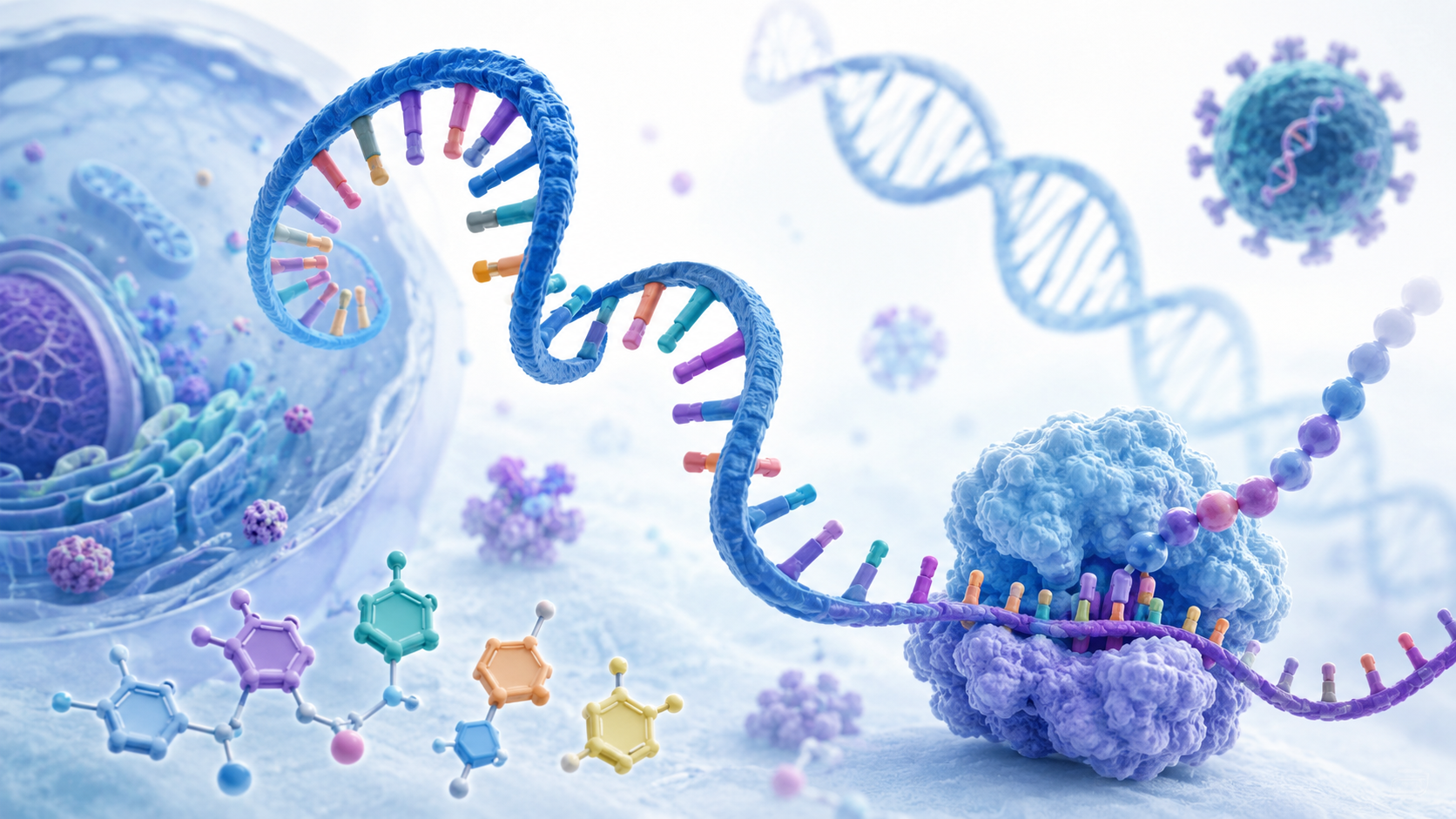
Ribonucleic acid, or RNA, is an essential molecule found in living cells.
RNA is made from nucleotides. These nucleotides link together to form long chains that support important life processes.
RNA exists widely in animals, plants, and microorganisms. It often works together with proteins to support cellular function.
RNA and DNA
RNA and DNA are the two main types of nucleic acids.
DNA stores and passes on genetic information. RNA helps use that information to support protein synthesis.
In simple terms, DNA stores the instructions. RNA helps turn those instructions into biological activity.
Major Types of RNA
RNA appears in several important forms. Each type has a different role in the cell.
- mRNA: carries genetic instructions for protein production
- tRNA: transports amino acids during protein synthesis
- rRNA: forms part of the ribosome, where proteins are made
RNA Structure
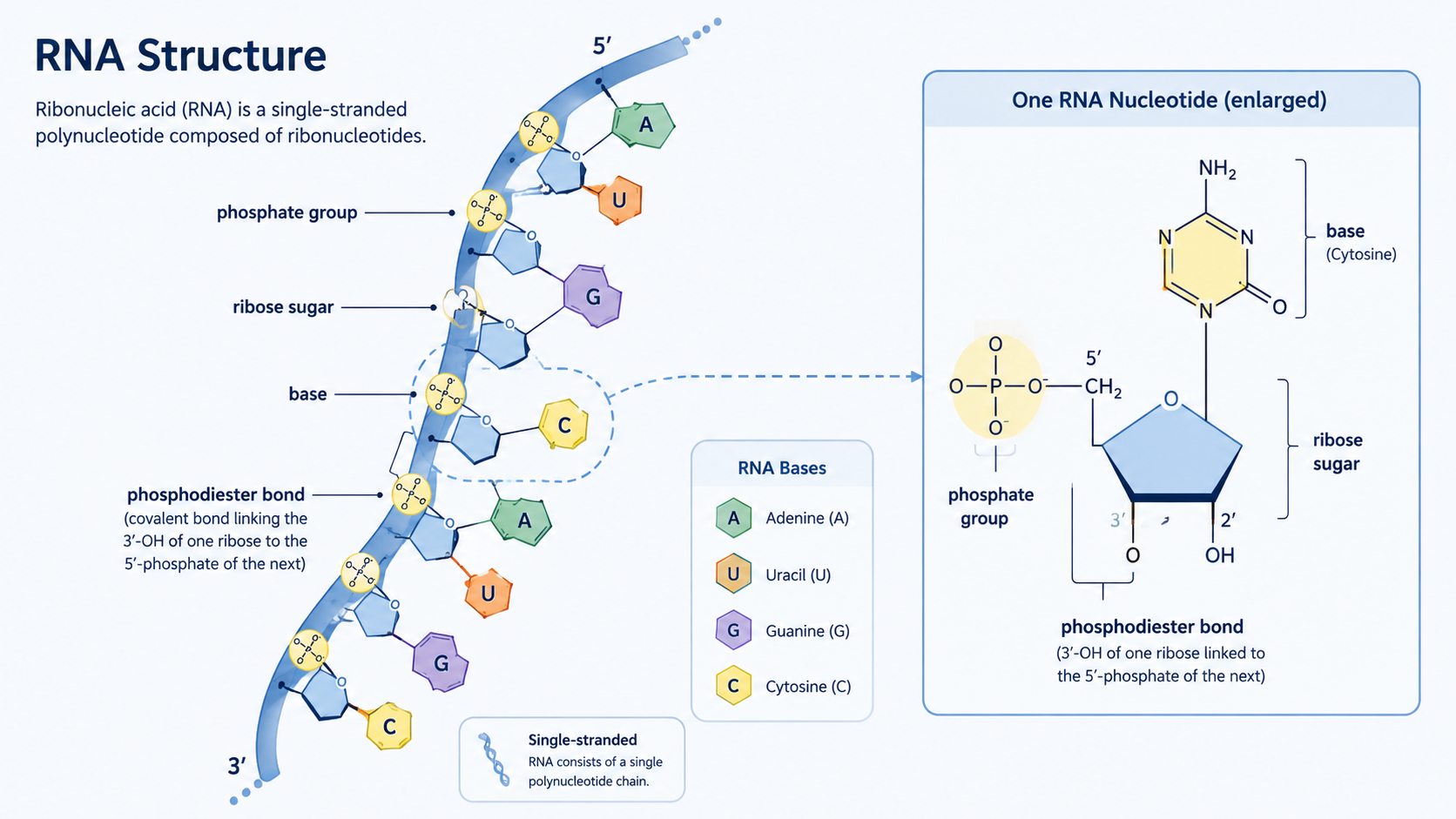
RNA is a long-chain molecule formed from ribonucleotides.
Each ribonucleotide contains three parts:
- A nitrogenous base
- A five-carbon sugar
- A phosphate group
These parts connect through phosphodiester bonds to form the RNA chain.
The Four RNA Bases
RNA contains four main bases:
- Adenine (A)
- Guanine (G)
- Cytosine (C)
- Uridine (U)
When RNA breaks down, it can form several 5′-nucleotides.
- Adenosine 5′-monophosphate (AMP)
- Guanosine 5′-monophosphate (GMP)
- Cytidine 5′-monophosphate (CMP)
- Uridine 5′-monophosphate (UMP)
The Role of RNA in Life
RNA plays a central role in protein synthesis.
Cells use RNA to help translate genetic information into functional proteins. These proteins support growth, repair, and normal cellular activity.
RNA also helps connect genetic information with daily biological function.
RNA in Viruses
Some viruses use RNA as their genetic material.
When these viruses enter a host cell, their RNA can guide the production of new viral components.
This shows the important role of RNA in biological systems.
Summary
RNA is more than a genetic molecule. It supports protein synthesis, cellular activity, and the flow of biological information.
Understanding RNA helps us better understand life at the molecular level.