Nucleotide Pool
Home » Nucleotide Pool
Cellular Nutrition Science
Nucleotide Pool: A Shared Metabolic Foundation of Life
Nucleotides are not only the building blocks of DNA and RNA. They also participate in energy transfer, cellular metabolism, biosynthesis, and signaling. The nucleotide pool describes the dynamic balance of these molecules inside living cells.
What Is the Nucleotide Pool?
The Cellular Balance of Nucleotides and Related Metabolites
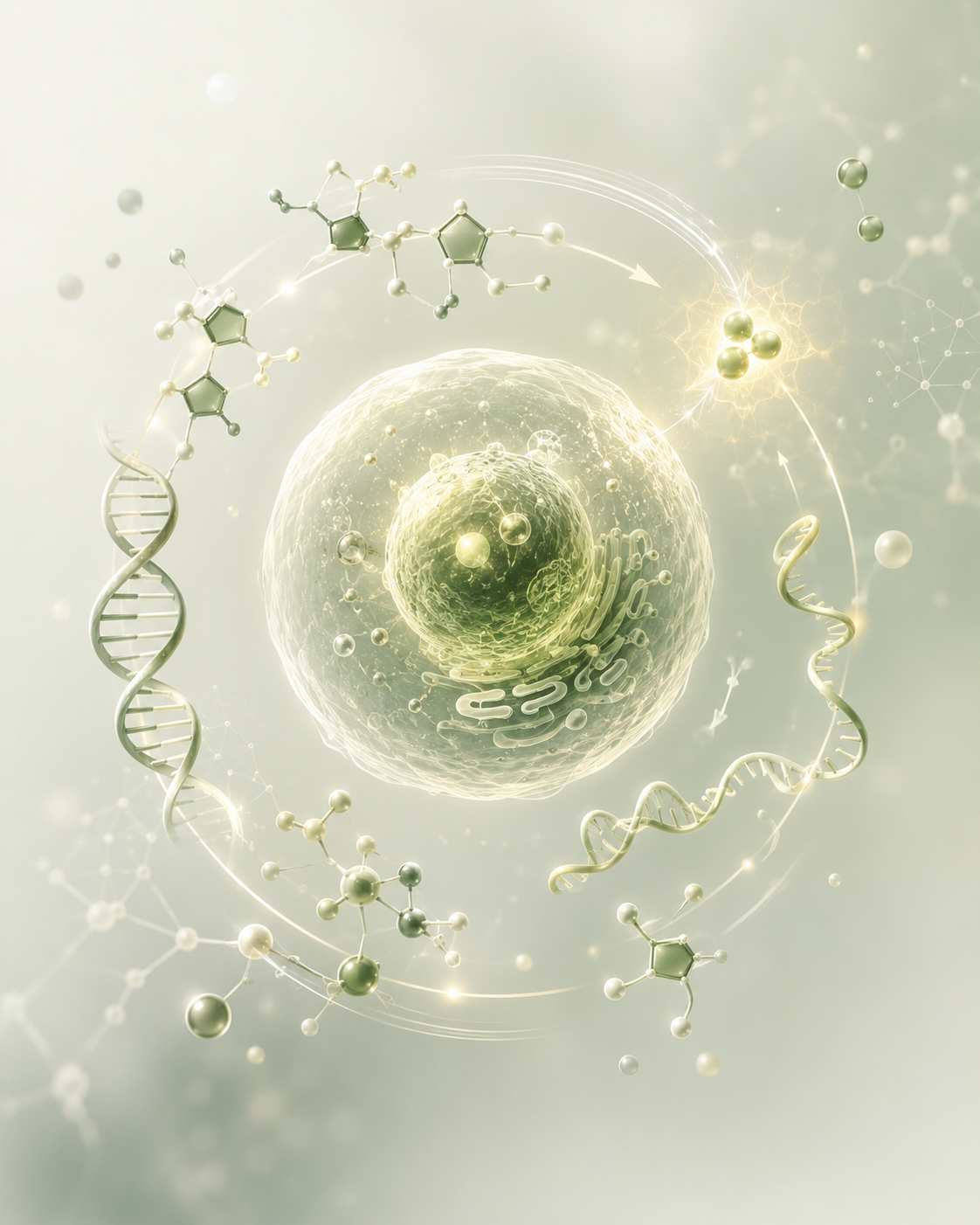
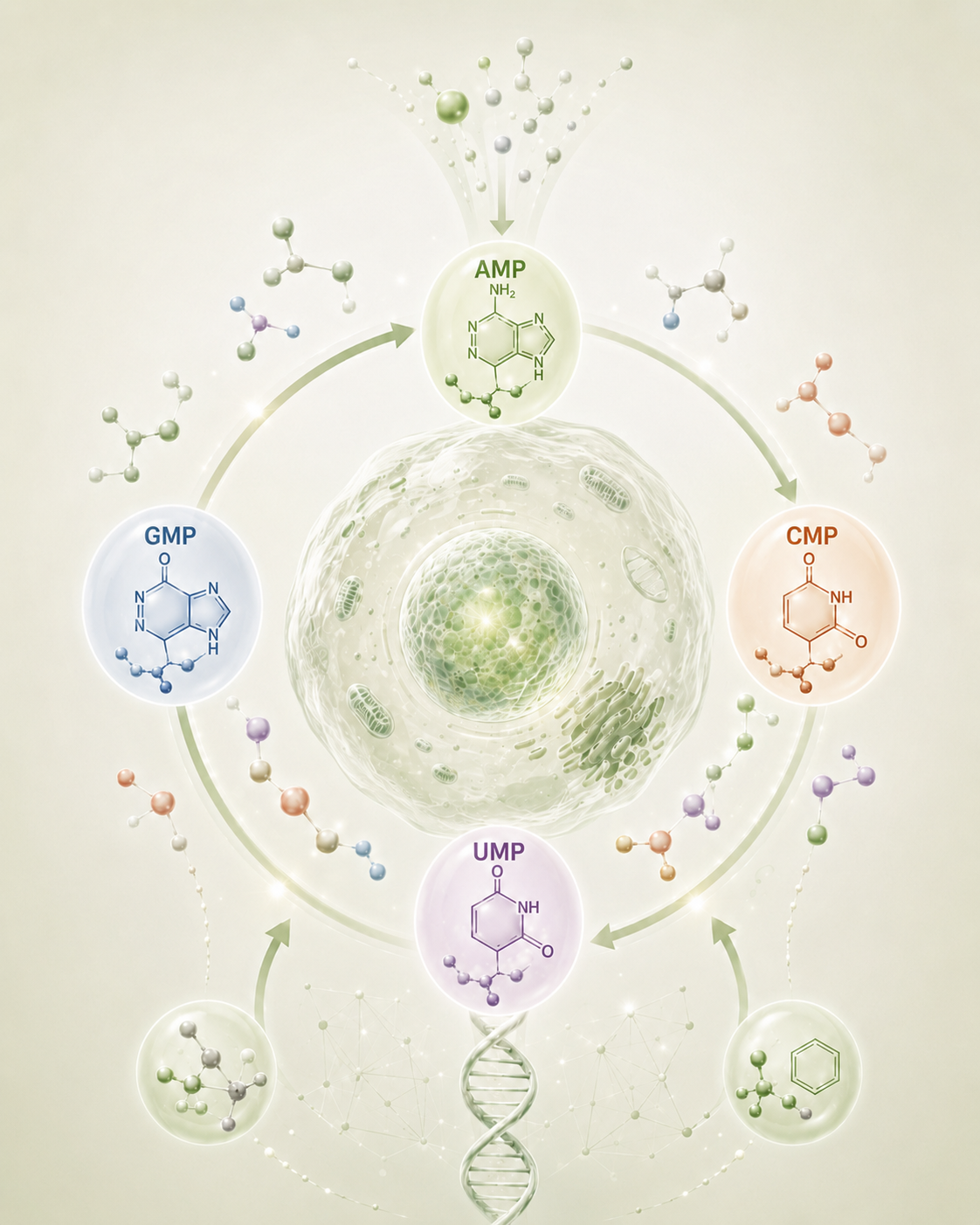
The nucleotide pool refers to the total amount and relative balance of nucleotides and related metabolites inside cells. These include molecules such as ATP, GTP, CTP, UTP, and their related forms.
Cells maintain this pool through two major pathways: de novo synthesis and salvage pathways. Together, these systems help support nucleotide availability, balance, and cellular metabolic stability.
Core Biological Functions
Why Nucleotide Balance Matters in Living Cells
Nucleotides participate in several essential cellular processes. Therefore, the nucleotide pool is not a single pathway. It is a foundational metabolic system that connects molecular biology, energy metabolism, and cellular function.
DNA/RNA Synthesis
Nucleotides provide the structural units required for nucleic acid synthesis and cellular information flow.
Energy Transfer
ATP and related molecules help transfer energy within cellular metabolism and biological work.
Metabolic Flux
Nucleotide metabolism interacts with biosynthesis, nutrient utilization, and cellular metabolic balance.
Cellular Signaling
Certain nucleotide-related molecules participate in signal transduction and adaptive cellular responses.
Nucleotide Pool Homeostasis
Cells Need Both Quantity and Balance
Nucleotide pool homeostasis means cells maintain not only adequate nucleotide availability, but also the proper balance among different nucleotide types.
Research has shown that nucleotide imbalance can influence DNA replication, genome stability, cell cycle regulation, and broader metabolic stability. For this reason, nucleotide balance is an important research topic in cellular biology.
Cross-Species Conservation
A Metabolic System Shared Across Life Forms
Although living systems differ in complexity, nucleotide metabolism remains highly conserved across evolution. This makes the nucleotide pool a useful concept for understanding humans, companion animals, plants, microorganisms, and yeast.
Mammals
In humans and companion animals, nucleotides relate to cellular renewal, immune cell proliferation, tissue metabolism, and growth or stress-related demand.
Plants
In plant systems, nucleotide metabolism connects with carbon metabolism, energy cycling, growth regulation, and signaling processes.
Microorganisms and Yeast
In microbial systems, the nucleotide pool can influence growth rate, nutritional stress responses, and metabolic adaptation mechanisms.
Life-Stage Perspective
Nucleotide Demand May Vary with Biological Context
Across different life stages and physiological contexts, cellular turnover, metabolic demand, and nucleotide synthesis capacity may change. This is why nucleotide metabolism attracts attention in nutrition research, including growth, stress response, and healthy aging studies.
Growth
Rapid tissue development may involve higher cellular synthesis and renewal needs.
Stress
Stress conditions may alter metabolic demand and adaptive cellular responses.
Maintenance
Healthy cells require ongoing turnover, repair, and metabolic coordination.
Aging
Healthy aging research explores nucleotide-related mechanisms within broader metabolic systems.
Exogenous Nucleotides
A Nutrition Research Area with Careful Boundaries
Under selected physiological or nutritional conditions, exogenous nucleotides have been studied as dietary sources that may contribute to nucleotide availability and nutritional support.
Current findings depend on the study model, population, formulation, intake level, and application context. Therefore, product development should rely on appropriate substantiation, safety evaluation, and market-specific regulatory review.
Regulatory note: This page does not claim that exogenous nucleotides diagnose, treat, cure, prevent disease, reverse aging, or extend lifespan.
Research Focus
ZABT Nucleotide Platform
Connecting Yeast-Derived RNA with Functional 5′-Nucleotides
Zhen-Ao Bio-Tech builds its nucleotide platform around yeast fermentation, RNA extraction, enzymatic conversion, purification, crystallization, and quality control. This integrated model supports ingredient consistency, traceability, and application-oriented development.
Yeast-Derived RNA
Yeast-derived RNA serves as a key upstream material for ZABT’s 5′-nucleotide production platform.
View RNA →Functional 5′-Nucleotides
ZABT supplies AMP, CMP, GMP, IMP, UMP, and customized nucleotide combinations for nutrition applications.
View nucleotides →Technical Services
ZABT supports customers with formulation discussion, documentation, premix development, and responsible application communication.
View services →Industry and Application Perspective
From Cellular Biology to Nutrition and Fermentation Applications
In food and nutrition science, nucleotides have been used and studied in several areas, including infant nutrition, dietary supplements, companion animal nutrition, yeast extract flavor systems, and fermentation-related applications.
Scientific Summary
The Nucleotide Pool Links Molecules, Metabolism, Cells, and Organisms
The nucleotide pool is not merely a chemical inventory inside the cell. It is a dynamic biological system that connects nucleic acid synthesis, energy transfer, metabolic regulation, cellular signaling, and organism-level function.
Its conservation across species highlights its importance in life science. As research continues, nucleotide-related mechanisms may provide useful perspectives for nutrition science, fermentation technology, and healthy aging research.
Disclaimer: This page is intended for scientific and B2B ingredient communication only. It does not provide medical advice and does not claim that any ZABT ingredient diagnoses, treats, cures, prevents disease, reverses aging, or extends lifespan. Finished-product claims must be reviewed according to local laws, product category rules, formulation, dosage, and substantiation requirements.
Nucleotide Science for Nutrition Innovation
Explore ZABT’s Yeast-Derived RNA and 5′-Nucleotide Platform
ZABT supports customers with yeast-derived RNA, functional 5′-nucleotides, customized premix services, technical documentation, and responsible nutrition application discussion.