What Is Yeast Hydrolysate?
Yeast hydrolysate is produced through yeast fermentation, followed by enzymatic hydrolysis, concentration, and drying.
It is rich in protein, polysaccharides, RNA, nucleotides, and other valuable nutrients. In animal feed, it can serve as a functional ingredient for growth, intestinal support, and normal immune function.
The 3 Core Nutrients of Yeast Hydrolysate
1. Proteins
Yeast hydrolysate provides essential amino acids and peptides. These nutrients support normal barrier function, growth, and body development.
2. Polysaccharides: MOS and β-Glucan
Yeast hydrolysate contains MOS and β-glucan. These components may help bind harmful microorganisms and mycotoxins, while supporting the body’s normal immune response.
3. RNA and Nucleotides
Nucleotides offer important nutritional value, especially for young animals. They are linked with immune support, cell renewal, intestinal development, antioxidant defense, and gut flora balance.
In addition, IMP and GMP provide strong umami effects. This can improve feed taste and feeding experience.
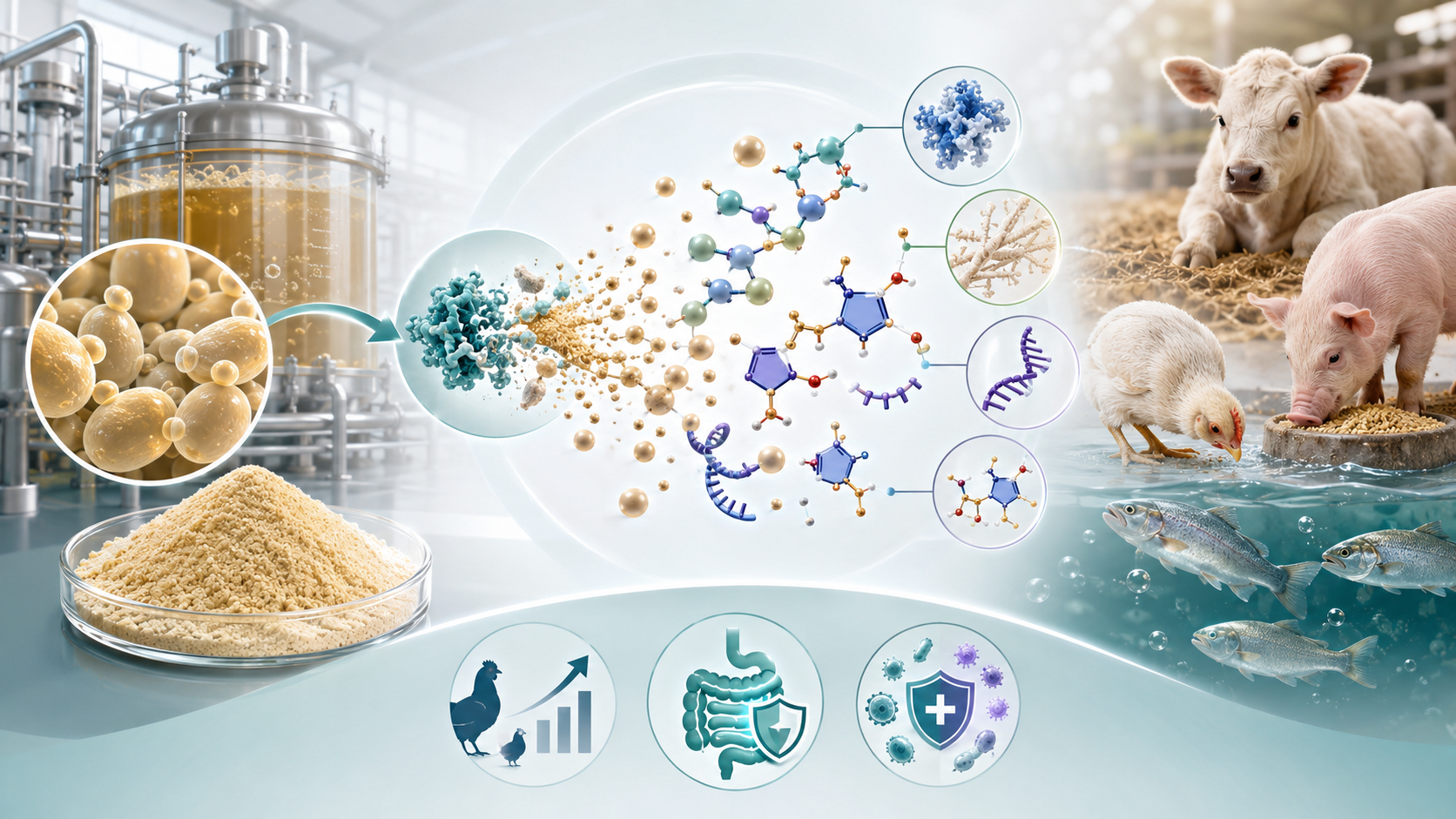
ZNA12 Yeast Hydrolysate
ZNA12 yeast hydrolysate contains 11.5% or more nucleotides and abundant protein.
It can be used in feed products to support normal immune function, growth, and nutritional performance in farmed animals.
A High-Quality Protein Feed Ingredient
Yeast hydrolysate provides strong nutritional value as a protein feed ingredient.
It has high apparent digestible energy and apparent metabolic energy. These values can exceed those of fish meal and soybean meal.
Its true digestibility of crude protein reaches 89.71%, and its true utilization rate reaches 69.53%.
During hydrolysis, yeast protein breaks down into smaller peptides, including small peptides, dipeptides, and tripeptides.
Crude Protein, RNA, and Nucleotides
ZNA12 contains more than 20.0% ribonucleic acid and over 11.5% nucleotides.
This level is higher than many similar products, which usually contain 5.0–8.0% nucleotides.
ZNA12 naturally provides abundant mononucleotides. As a result, animals may digest and absorb them more directly, with less nutrient loss.
In ZNA12 yeast hydrolysate, nucleotide C and U exceed 2.50%, while A and G are above 3.30%.
Why Nucleotides Matter in Animal Nutrition
RNA and nucleotides play important roles in animal growth and development.
Exogenous nucleotides can support small intestine development, intestinal microbial balance, liver protein synthesis, and normal liver function.
They may also support immune function, free radical scavenging, and antioxidant defense.
Why Feed May Need Extra Nucleotides
Conventional feed may not provide enough nucleotides for certain animals or production stages.
For this reason, yeast hydrolysate can serve as an additional nucleotide source.
After ingestion, digestive enzymes break yeast nucleic acids into single nucleotides. These compounds then enter normal metabolic pathways.
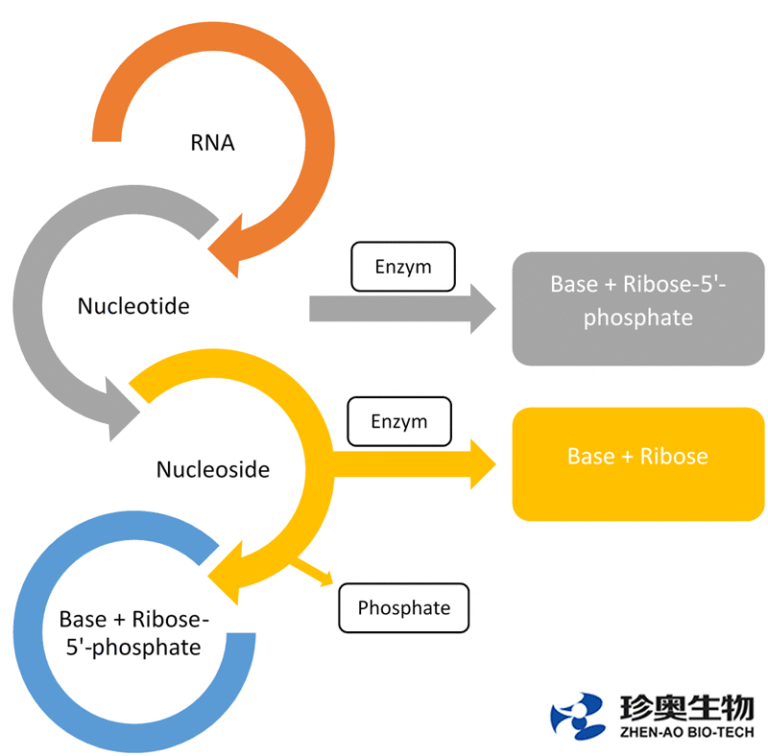
How Enzymes, RNA, and Nucleotides Work Together
Yeast nucleotides in feed can support palatability, tissue development, and normal physiological function.
IMP and GMP provide umami taste, while nucleotides A, G, C, and U support young animals during growth and stress.
In addition, exogenous nucleotides may support cell proliferation, intestinal villi development, beneficial bacteria growth, and T cell maturation.
A Source of Exogenous Nucleotides
ZNA12 yeast hydrolysate can serve as a source of exogenous nucleotides for animal stress, rapid growth, and disease prevention strategies.
By providing nucleotides, it supports important physiological functions in animal nutrition.
Learn More
Learn more about our animal nutrition products and yeast-derived functional ingredients.