Aging Biomarkers


Healthy Aging Science

Biomarkers: Measuring Healthy Aging Through Science

A cross-species framework for evaluating cellular, metabolic, immune, functional, and microbiome-related changes during aging.

Biomarkers help translate healthy aging from visual observation into measurable biological information. In the Geronutrition framework, they connect aging-related changes with nutrition strategy, formulation design, and responsible scientific communication.

Healthy aging biomarkers and Geronutrition science framework

What Are Biomarkers?

Scientific Indicators for Understanding Aging-Related Change

Biomarkers are measurable indicators that help describe biological status. In healthy aging science, they can provide early signals of cellular, metabolic, immune, structural, and microbiome-related changes.

Within a Geronutrition framework, biomarkers help bridge three areas: biological change, physiological function, and nutrition strategy. They do not replace professional evaluation, but they can support research, formulation, and evidence-based communication.

Why Biomarkers Matter

From “Looks Healthy” to Measurable Healthy Aging

Traditional health assessment often relies on appearance, general condition, or single indicators. Biomarkers provide a more structured way to evaluate aging-related biology, monitor research outcomes, and refine nutrition strategies.

01

Earlier Biological Signals

Biomarkers can help researchers identify biological shifts before they become obvious through external appearance or simple observation.

02

Quantifiable Evaluation

Measurable indicators help compare baseline status, follow changes over time, and support scientific interpretation.

03

Better Nutrition Strategy

Biomarker information can guide ingredient selection, formulation logic, research design, and responsible claim development.

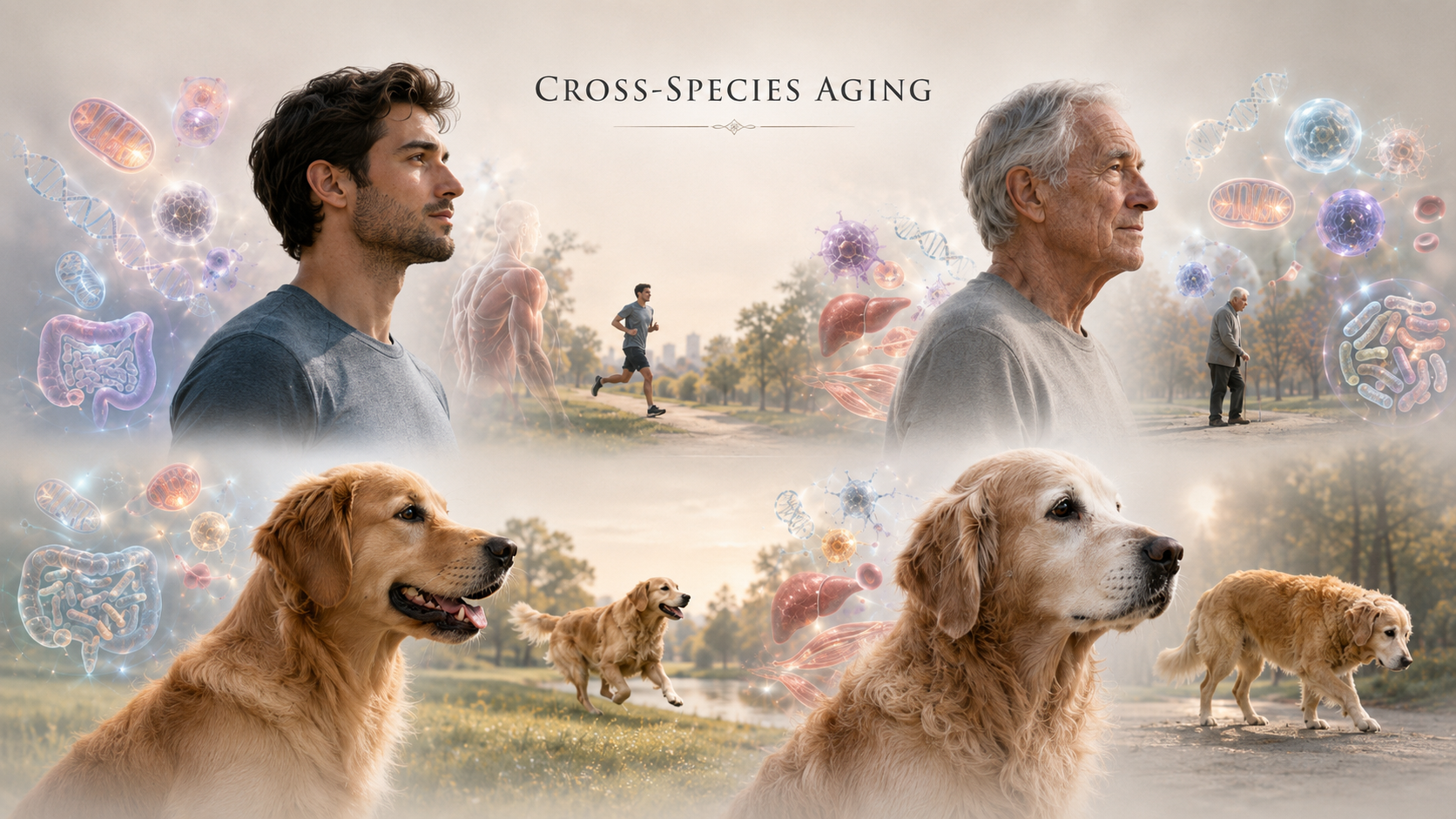
Cross-species biomarkers for human and companion animal healthy aging

Cross-Species Healthy Aging

A Shared Biological Language for Humans and Companion Animals

Humans and companion animals experience aging through related biological themes, including cellular maintenance, energy metabolism, immune balance, oxidative stress, and gut microbiome changes.

These shared themes create a scientific basis for cross-species Geronutrition research. However, each species still requires its own study design, diet context, safety assessment, and regulatory review.

Shared biology: cellular renewal, metabolism, immune regulation, oxidative balance, and microbiome ecology.
Species-specific context: diet, physiology, behavior, clinical measurement, and regulatory requirements.
Biomarker Classification

A Practical Framework for Healthy Aging Evaluation

Healthy aging biomarkers can be organized into several biological layers. This classification helps researchers and formulators connect scientific data with nutrition application.

01

Cellular & Genetic

Telomere-related indicators, epigenetic age research, DNA maintenance, and cellular renewal.

02

Metabolic

Energy metabolism, mitochondrial function research, nutrient utilization, and oxidative stress markers.

03

Systemic

Bone-related status, immune indicators, inflammation-related markers, and metabolic organ indicators.

04

Functional

Body condition, muscle condition, activity, mobility, coat appearance, skin condition, and vitality.

05

Microbiome

Gut microbial composition, microbial metabolites, and gut-immune-metabolic interface research.

Shared and Species-Specific Indicators

What Humans and Companion Animals Share — and Where They Differ

Shared Biomarker Themes

Common Biological Mechanisms

  • Mitochondrial and energy metabolism research
  • Oxidative stress and antioxidant status
  • Immune and inflammatory balance
  • Gut microbiome structure and function
  • Body condition and physiological resilience

Important Differences

Different Evidence and Measurement Contexts

  • Human studies often use more developed clinical and epigenetic datasets.
  • Companion animal studies rely more on behavior, body condition, and objective veterinary markers.
  • Diet, metabolism, lifestyle, and environment differ by species.
  • Claims and labeling rules differ by market and product category.

Biomarkers and Nutrition Strategy

Using Biomarkers to Guide Responsible Nutrition Innovation

Nutrition plays an important role in basic maintenance, cellular turnover, immune regulation, metabolic balance, and gut ecology. Biomarkers help researchers understand how these biological areas may respond within a defined study or formulation context.

For ingredient companies, biomarkers can support more disciplined product development. They help connect ingredient selection, mechanism exploration, application testing, and communication boundaries.

Regulatory note: Biomarkers should not be used to imply disease treatment or guaranteed physiological outcomes. Finished-product claims must follow local laws, product category rules, and substantiation requirements.

Application Logic

Biological change → measurable indicator
Measurable indicator → research interpretation
Research interpretation → formulation strategy
Formulation strategy → responsible communication

ZABT Healthy Aging Platform

Connecting Biomarkers, Geronutrition, and Yeast Biotechnology

Zhen-Ao Bio-Tech builds its healthy aging nutrition platform around yeast-derived RNA, functional 5′-nucleotides, yeast extracts, and application-oriented research. This platform supports both human nutrition and companion animal nutrition discussions within appropriate regulatory boundaries.

01

Yeast-Derived RNA

RNA serves as an upstream platform for nucleotide production and broader yeast-derived ingredient innovation.

View RNA →
02

Functional 5′-Nucleotides

5′-nucleotides can support formulation strategies related to cellular maintenance and nutrition for healthy aging research.

View nucleotides →
03

Geronutrition Application

Biomarker-informed thinking supports more systematic nutrition design for humans and companion animals.

View services →

Responsible Communication

Scientific Language with Clear Regulatory Boundaries

Biomarker discussions can help explain scientific rationale, but they require careful communication. This page does not claim that any ingredient diagnoses, treats, cures, prevents disease, reverses aging, or extends lifespan.

ZABT recommends that customers evaluate finished-product claims according to local regulations, product category, target market, label language, dosage, application format, and available substantiation.

Next-Generation Healthy Aging Nutrition

Biomarkers Make Healthy Aging Easier to Measure and Understand

By linking measurable indicators with Geronutrition, ZABT aims to support a more systematic, responsible, and science-based approach to healthy aging nutrition.