A Scientific View of Healthy Aging
Aging is not only about getting older. It also involves a gradual change in how the body maintains normal cell function.
Over time, cells may become less able to repair damage, manage stress, and keep energy balance.
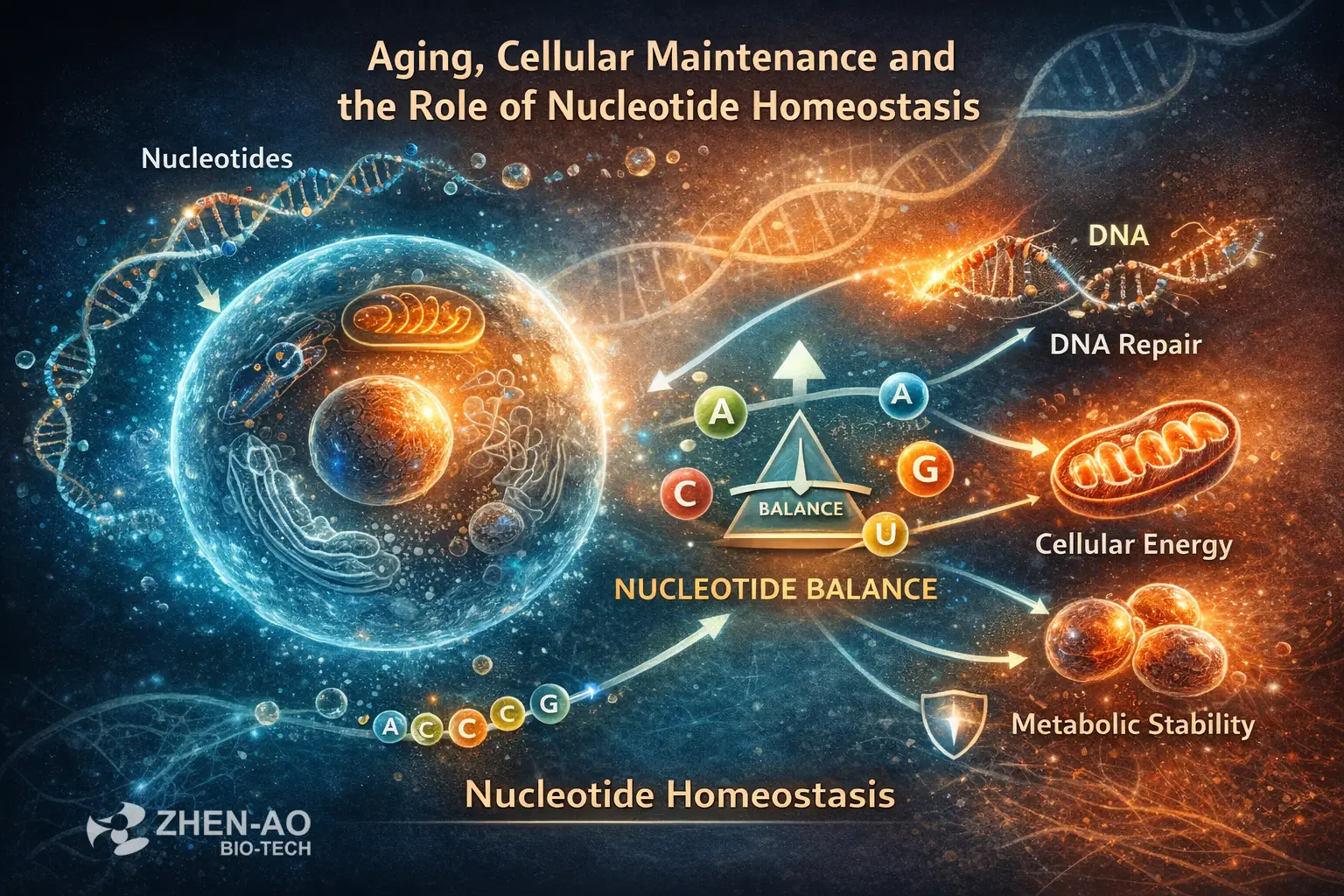
Recent aging research has also drawn attention to nucleotide balance. This means the body’s ability to make, recycle, and use nucleotides when cells need them.
Aging Is More Than Damage
Many people think aging is mainly caused by damage building up in the body.
This damage may include DNA damage, oxidative stress, and changes in proteins.
However, damage is only part of the story. Cells also need enough ability to respond after damage occurs.
For example, DNA repair, mitochondrial maintenance, and protein renewal all depend on good nucleotide metabolism.
When this system becomes weaker, even small stressors may have a larger effect.
Why Nucleotide Balance Matters
Nucleotides are building blocks of DNA and RNA. However, they do more than support genetic material.
Cells also use nucleotides for daily maintenance and repair.
They help support:
- DNA repair and genomic stability
- Mitochondrial DNA maintenance
- Cellular stress responses
- Basic metabolic regulation
With age, the body may become less efficient at making and recycling nucleotides.
This does not usually cause sudden failure. Instead, it may slowly reduce the cell’s reserve capacity.
As a result, cells may remain alive but become less flexible under stress.
Context Matters in Nutrition
Aging research also shows that nutrition is highly context-dependent.
This means that timing, dosage, and health status all matter.
Therefore, age-related changes in nucleotide metabolism do not mean that more supplementation is always better.
In some cases, a poorly matched approach may not help. It may even work against the body’s needs.
For this reason, healthy aging research should focus on precision, not general claims.
What This Means for Healthy Aging Research
Nucleotide balance may be an important area for future aging research.
It may help scientists better understand how cells maintain function over time.
This also suggests several useful research directions:
- Focus on functional resilience, not only visible aging markers
- Study long-term, gentle nutritional strategies
- Use mechanism-based research to guide applications
- Avoid one-size-fits-all conclusions
A Responsible Scientific Approach
Healthy aging should not be framed as “reversing aging.”
Instead, research should focus on how to support the body’s natural ability to maintain and repair itself.
Nucleotide science may help explain part of this process.
However, future applications should be guided by strong evidence, careful dosage, and clear biological context.
Summary
Nucleotide homeostasis refers to the body’s ability to keep nucleotide supply and use in balance.
This balance supports DNA repair, RNA function, energy-related processes, and cellular maintenance.
As aging research develops, nucleotide metabolism may become an important part of precision nutrition and healthy aging science.
Reference
Selected insights informed by recent peer-reviewed research in aging biology and nucleotide metabolism. PMID: 40362739.