Introduction: Beyond Basic Nutrition
Infant nutrition is no longer defined solely by macronutrients such as proteins, fats, and carbohydrates. Increasingly, attention has shifted toward functional components that actively support development at the cellular and systemic levels.
Among these, dietary nucleotides have emerged as a critical yet often underappreciated class of bioactive compounds.
Naturally abundant in human breast milk, nucleotides play a foundational role in:
- Cellular proliferation
- Immune system maturation
- Gastrointestinal development
- Metabolic regulation
As infant formula continues to evolve toward closer alignment with human milk, nucleotide supplementation has become an important area of scientific and industrial focus.
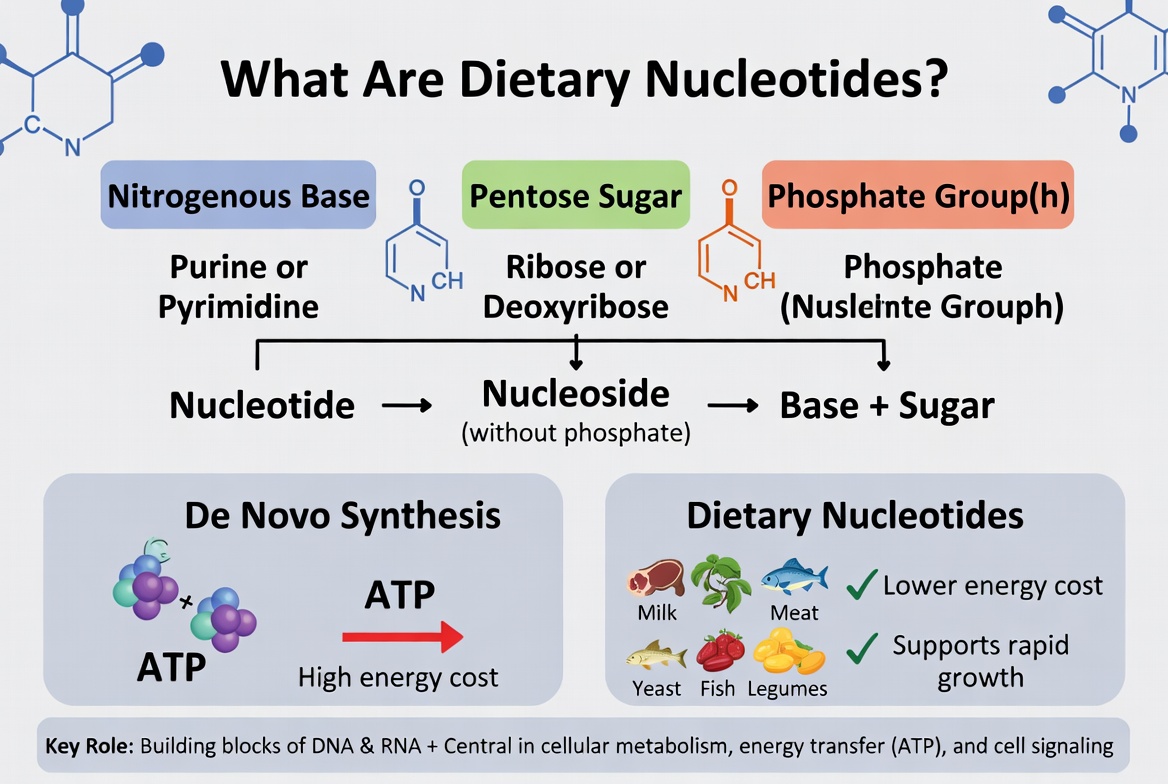
Dietary Nucleotides Structure
Why Infants Benefit from Dietary Nucleotides
1. Support for Rapid Cell Proliferation
Infants experience rapid tissue growth, requiring efficient DNA and RNA synthesis.
Dietary nucleotides provide substrates for:
- DNA replication
- RNA transcription
- Protein synthesis
This is particularly relevant in tissues with high turnover, such as the intestinal epithelium and immune cells [5].
2. Gastrointestinal Development and Function
The neonatal gut undergoes significant maturation postnatally. Studies suggest that nucleotide supplementation may:
- Promote intestinal cell growth
- Enhance mucosal integrity
- Support digestive and absorptive function [6]
Additionally, nucleotides may influence gut microbiota composition, contributing to a more favorable intestinal environment [7].
3. Immune System Maturation
The neonatal immune system is immature and highly responsive to nutritional modulation. Clinical and preclinical studies indicate that dietary nucleotides may:
- Enhance immune cell activity
- Support antibody responses
- Influence cytokine production [8,9]
Some randomized trials have reported associations between nucleotide-supplemented formula and reduced incidence of diarrhea or infections [10].
4. Lipid Metabolism and Energy Utilization
Nucleotides are involved in metabolic pathways that regulate lipid metabolism. Evidence suggests they may:
- Improve lipid absorption
- Enhance fatty acid utilization
- Support overall energy balance during growth [11]
Human Milk as a Reference Model
Human breast milk contains a natural spectrum of nucleotides, including CMP, UMP, AMP, GMP, and IMP [1].
These compounds are believed to contribute to the physiological advantages observed in breastfed infants.
Modern infant formulas aim to replicate both the composition and functional role of these nucleotides [2].
Incorporation into Infant Formula
Dietary nucleotides are widely used in infant formula across major global markets. Regulatory and scientific bodies—including European Food Safety Authority and the U.S. Food and Drug Administration—have evaluated their safety and use in infant nutrition.
Their inclusion is supported by:
- Established safety profiles
- Clinical evidence of functional benefits
- Long history of use in infant feeding
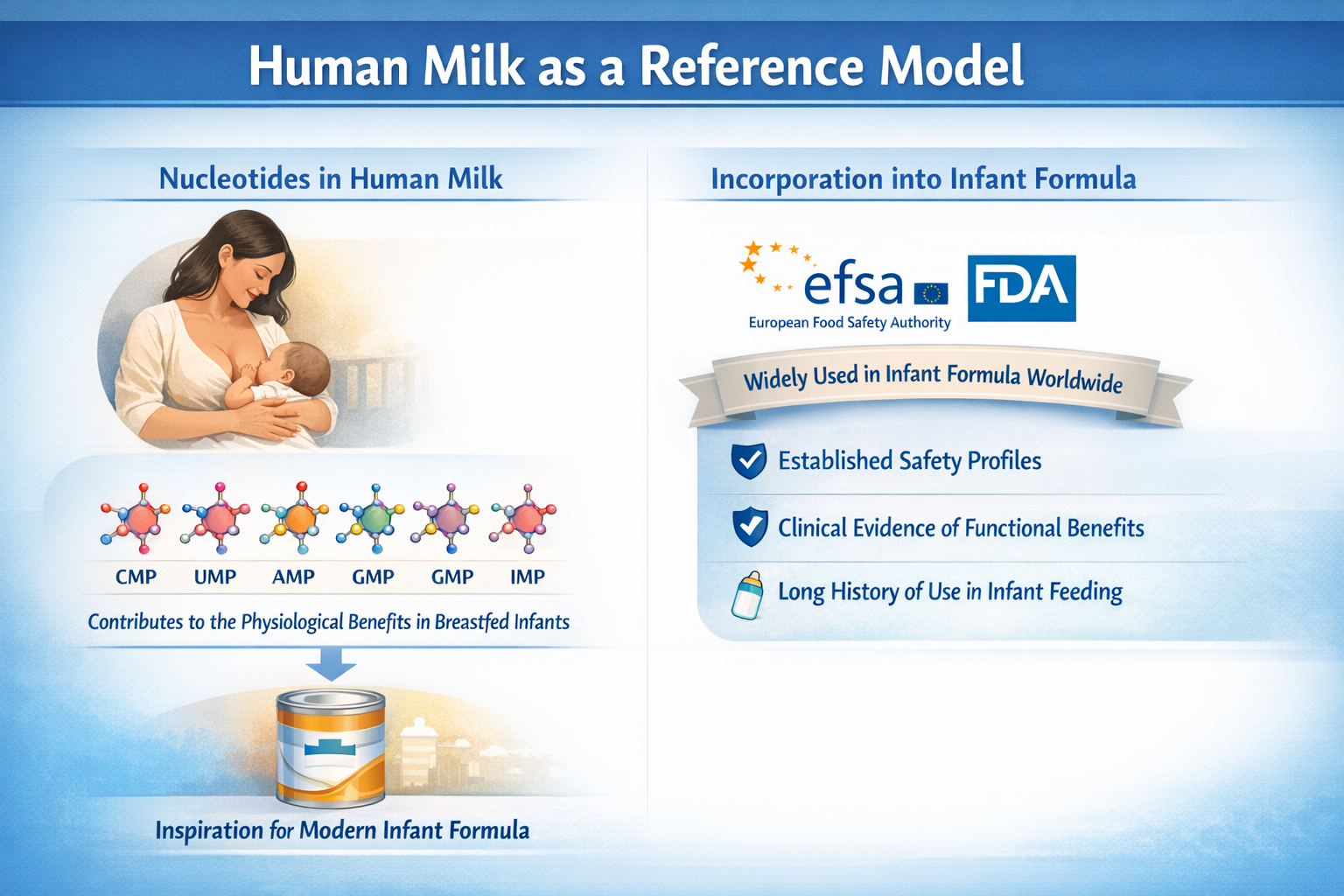
Human Milk and Infant Formula Comparison
Manufacturing Considerations: Purity and Consistency
The efficacy and safety of nucleotide supplementation depend on:
- Source, commonly yeast-derived RNA
- Extraction and hydrolysis methods
- Purity and impurity control
Advanced fermentation and enzymatic processing technologies enable the production of high-quality nucleotides suitable for infant-grade applications.
Zhen-Ao Bio-Tech Perspective
At Zhen-Ao Bio-Tech, we have developed a vertically integrated platform covering:
- Yeast fermentation
- RNA extraction
- Enzymatic hydrolysis into 5′-nucleotides
- Quality control aligned with international standards
This integrated capability supports consistent production of nucleotide ingredients suitable for sensitive nutritional applications.
Conclusion: A Functional Nutrient for Early Life
Dietary nucleotides represent a scientifically grounded addition to infant formula. They support multiple dimensions of early development, including:
- Cellular growth
- Gastrointestinal maturation
- Immune system development
- Metabolic function
As infant nutrition advances, nucleotides exemplify a broader shift:
From meeting basic nutritional requirements → to supporting biological function and developmental trajectories.
References
- Leach JL, Baxter JH, Molitor BE, et al. Total potentially available nucleosides of human milk by stage of lactation. Am J Clin Nutr. 1995.
- ESPGHAN Committee on Nutrition. Nucleotides in infant nutrition. J Pediatr Gastroenterol Nutr. 1994.
- Carver JD, Walker WA. The role of nucleotides in human nutrition. J Nutr Biochem. 1995.
- Uauy R. Dietary nucleotides and requirements in early life. J Nutr. 1994.
- Grimble GK. Dietary nucleotides and gut mucosal defense. Gut. 1994.
- Gil A. Modulation of the immune response mediated by dietary nucleotides. Eur J Clin Nutr. 2002.
- Sánchez-Pozo A, Gil A. Nucleotides as semiessential nutritional components. Br J Nutr. 2002.
- Carver JD. Dietary nucleotides: effects on the immune and gastrointestinal systems. Acta Paediatr Suppl. 1999.
- Kulkarni AD, Rudolph FB, Van Buren CT. The role of dietary nucleotides in immune function. J Nutr. 1994.
- Brunser O, Espinoza J, Araya M, et al. Effect of dietary nucleotide supplementation on diarrheal disease in infants. Acta Paediatr. 1994.
- López-Navarro AT, et al. Influence of dietary nucleotides on lipid metabolism. Clin Nutr. 1996.